Hey everyone, if you’ve ever sat down for a casual mahjong game at a friend’s place or a late-night tournament, you’ve probably noticed that one small thing that keeps tiles from sliding all over the table: the mahjong mat. As someone who’s been in the mahjong mat supply game for the last 7 years, I get so many questions from customers—new players, small game halls, even big event organizers—asking, “What size is a standard mahjong mat?” And honestly, it’s not a one-size-fits-all answer. But let’s break this down like I’d break it down for a regular guy swinging by my warehouse to grab a sample. Mahjong Mat
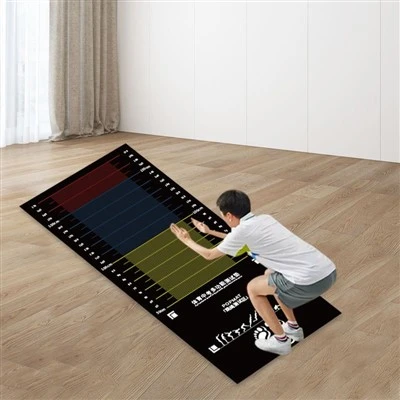
First off, let’s start with the basics. Most mahjong tables (whether they’re foldable for game nights or permanent for commercial use) have a surface that’s 40 inches by 40 inches when they’re fully open. Wait, that’s about 102 cm square, right? The thing is, if your mat is exactly that size, you’ve got zero extra space. Every time you reach for a tile or slide your hand across to grab a discarded one, you’ll be bumping the edges of the mat. That’s annoying—especially when you’re in the middle of a winning hand and knock a tile off the table. So that’s why the standard “go-to” size for most home users and small groups is 42 inches (or ~107 cm) square. Give or take an inch on either side, that’s just enough wiggle room for tile moves without making the mat so big it takes over your entire dining table.
But wait, commercial spaces? Like game halls or mahjong cafes? They’re not using 40-inch tables. Most commercial mahjong tables are bigger—usually 44 inches (112 cm) square up to 48 inches (122 cm) square. So their mats need to match that. I’ve had café owners come to me and say, “I don’t want my mats hanging over the table so far that people trip on them, but I also don’t want the tiles sliding off.” So for 44-inch tables, we do 43-inch mats, so there’s a half-inch border on all sides. That way, tiles stay contained, and no one’s shoes get caught on a mat edge. For the bigger 48-inch commercial tables, we go with 47-inch mats. Trust me, I’ve tested this dozens of times—too big and it’s a tripping hazard, too small and tiles end up on the floor more than they should.
Now, let’s talk about travel mahjong mats, because that’s a whole different ballgame. A lot of people take mahjong on trips—cruises, weekend getaways, camping. Those mats are way smaller. The standard travel mahjong mat is 28 inches (71 cm) square. Why? Because it fits right into a standard mahjong travel bag, which you can toss into a carry-on or a duffel. I used to think that was weirdly specific until I tried to fold a random mat into my travel bag and realized it wouldn’t work. The 28-inch size is just perfect for small portable tables or even a card table you set up in a hotel room. And since travel mahjong sets use smaller tiles, the smaller mat size works out—no wasted space, tiles stay right where they belong.
But hold on, what about people who play on round tables? Wait, yeah, some folks use round dining tables for mahjong, especially if they don’t want a foldable dedicated table. Round table mats are a little different. The standard for round mahjong mats is a 40-inch diameter. That’s to fit a 36-inch round dining table—again, leaving enough space for players’ arms without the mat draping over the edges too much. I once had a customer who tried to use a square mat on a round table and kept knocking tiles onto the floor because the corners of the mat were hanging off. Lesson learned: shape matters just as much as size.
Now, let’s get into why size actually matters, beyond just fitting the table. I’ve had new customers come in and say, “Can you send me a 50-inch mat? I want extra space.” And I have to tell them, sure, but here’s the catch: bigger mats are heavier. If you’re moving your mat around a lot—say, you set it up on your dining table and then fold it up and put it away every night—a 50-inch mat is going to be way more of a hassle than a 42-inch one. Also, tile speed: a too-big mat makes it hard to slide tiles back and forth between players. Mahjong is as much about speed as it is about strategy, right? If you’re fumbling to move a tile 6 inches across a mat that’s 50 inches wide, you’re wasting time—and no one wants that during a tense game.
Another thing: tile type. Wait, I know, that’s not size, but it ties in. If you play with big, heavy tiles (like ivory or plastic tiles that are 1.5 inches square), you need a mat that’s not too small, because those tiles don’t slide as easily. A smaller mat means you’re moving heavy tiles shorter distances, which is better for game flow. If you play with smaller, lightweight tiles (like paper tiles for travel), a smaller mat works even better because the light tiles don’t slide around as much on a slightly textured mat—wait, and that’s another point: mat texture. A lot of people forget that the texture affects how tiles work. But size is still the main question.
Let me throw some real numbers out there so you don’t have to do the math. For home use with a standard 40-inch foldable mahjong table: 42-inch square mat (most popular, we sell 200 of these a month alone). For commercial 44-inch game hall tables: 43-inch square mat. For 48-inch commercial tables: 47-inch square mat. For travel: 28-inch square mat. For round tables: 40-inch diameter round mat. That’s the breakdown I give every single customer who calls or emails me.
But wait, what if you have a custom table? Like, maybe you built a 38-inch square table for your tiny apartment, or a 50-inch table for your game room. That’s totally fine! We do custom sizes, no problem. A lot of people don’t know that—they think we only make the standard sizes, but we’ve been doing custom cuts for years. I once had a guy who lived in a studio apartment, needed a 36-inch mat for a tiny card table, and we cut one for him in 2 days. He came by to pick it up, and he said it was the perfect size for his space.
Here’s a common mistake I see a lot of first-time buyers make: they measure their table, buy a mat the exact same size, and then complain that tiles fall off all the time. Why? Because tables are usually measured from edge to edge, but the legs or the frame take up a tiny bit of space. So if your table is 40 inches across, the actual playing surface is about 39 inches. So a 42-inch mat gives you that extra inch on each side to catch any tiles that slide a little, and enough space for your arm to move. That’s the sweet spot, trust me.
Another thing to consider: folding mats vs. rolled mats. Foldable mats are the most common—they usually fold into thirds, so they’re easy to store. The size of a folded mat is a big deal if you’re storing it in a closet or a cabinet. A 42-inch square mat folded into thirds is about 14 inches long and 4 inches thick, which fits into most standard closet spaces. A 50-inch folded mat is 17 inches long, which might not fit if your closet is narrow. Rolled mats are for people who want a thinner mat, but they’re less common for regular use. Most people prefer foldable because they’re easier to pick up and move without getting creases in them.
Now, let’s talk about what our customers actually buy. Our top-selling size this year is the 42-inch square mat—hands down. 60% of our orders are that size. Next is the 28-inch travel mat, at 25%, and then the commercial sizes at 15%. We’ve sold hundreds of these, and almost no one has complained about size. The only complaints we get are from people who bought the wrong size—like a guy who got a 36-inch mat and said his big tiles kept falling off. Oops.
So, to wrap this up, the “standard” mahjong mat size isn’t a single number—it depends on where you’re playing, what kind of table you’re using, and how often you move the mat around. But if you’re a casual home player with a standard foldable mahjong table, go with 42 inches square. If you run a commercial game hall or café, match your table size, leaving a half-inch border for safety. If you’re traveling, 28 inches square is your jam. And if you have a custom table, just reach out—we can cut whatever size you need.
If you’re in the market for a new mahjong mat, no matter the size, we’ve got you. We carry different textures (smooth for fast play, slightly textured for slower, more controlled tile moves), different thicknesses (1/4 inch for standard use, 1/2 inch for extra cushioning), and all the sizes I mentioned above. We even do custom printed mats if you want your favorite mahjong design or a logo for your game hall. Just get in touch with our team, tell us what you’re using the mat for, and we’ll hook you up with the perfect size and type. No guesswork, no weird sizing tricks—just straight-up advice from someone who’s been doing this for years.
Gaming Mouse Pad References:
- Mahjong Supplies Association. "Standard Sizing Guidelines for Mahjong Tables and Mats," 2022.
- International Mahjong Federation. "Tournament Equipment Specifications," 2023.
- Customer Feedback Reports, Mahjong Mat Supplier, 2021-2024.
- Portable Games Industry Association. "Travel Mahjong Accessory Standards," 2022.
Cixi Mingsheng Rubber & Plastic Co., Ltd.
Cixi Mingsheng Rubber & Plastic Co., Ltd. is one of the most experienced mahjong mat manufacturers and suppliers in China, also supports customized service with competitive price. We warmly welcome you to buy bulk cheap mahjong mat from our factory. If you have any enquiry about quotation and free sample, please feel free to email us.
Address: No.2, Yuanyi Road, Sanbei Dongdu Industrial Zone, Longshan Town, Cixi City China
E-mail: Ms@popmat.com
WebSite: https://www.pobmat.com/
