If you’re a textile machinery supplier like me, you’ve probably spent way too many late nights staring at order sheets, trade show leads, and random LinkedIn comments from factory managers asking, “Is this still a good time to upgrade my looms?” Let me cut to the chase: the market demand for our gear isn’t just up—it’s shifting, hard, and if you don’t pay attention to the tiny, messy details, you’re gonna get left behind. I’ve been in this game for 12 years, traveling from small knit mills in Bangladesh to big woven facilities in Turkey, and what I see isn’t just “people need machines.” It’s a mix of panic, opportunity, and a whole lot of pressure that no one’s talking about. Textile Machinery

First, let’s get the obvious stuff out of the way: post-pandemic, the global textile industry bounced back hard in 2021 and 2022, right? I remember back in 2020, everyone was cancelling orders, factories were sitting idle, and half my leads were sending me meme emails about toilet paper shortages. But by 2023? Retail sales for apparel and home textiles hit like $1.7 trillion globally, per the latest data I saw from that textile industry research group (I’ll link it later in the refs, but no random urls, promise). The problem is—those orders aren’t the same as they were pre-2020. Before, brands could afford to overproduce, overstock, and sell extra at 50% off. Now? Fast fashion’s gone sideways, with Shein and Temu churning out 100 new styles a week, but mid-range brands and even luxury ones are holding way less inventory, ordering smaller batches, and expecting faster turnaround. Which means factories need machinery that can do small runs, switch patterns in minutes, not hours.
That’s where the demand for flexible, automated machines comes in. A few months back, I was talking to a knit mill owner in Vietnam who used to have 10 old circular looms that could only run one pattern at a time. He told me last year he added 3 of our newer modular machines, the ones that let you swap from a cotton t-shirt hem to a knit sweater neck in 15 minutes. His order sizes went from 10,000 pieces per style to 2,000, and he’s got 12 new clients he couldn’t take before because his old machines were too inflexible. That’s not an isolated case. The International Textile Manufacturers Federation (ITMF) did a survey last year where 68% of mill managers said their top priority for new machinery was “modular, quick-change capabilities” over speed or total output. Makes sense, right? No one wants to be stuck with a machine that can crank out 1,000 meters of fabric an hour if you only need 500.
Then there’s the elephant in the room: sustainability. Everyone’s yelling about net-zero, but for textile mills, that’s not just a buzzword—it’s a requirement. Major brands like Nike, H&M, and Patagonia have strict “sourcing mandates” now, which means their suppliers can’t have water usage over a certain amount, can’t use as much energy, and have to cut down on textile waste. So my phone’s blowing up with calls from mills asking for machines that use less water, less energy, and generate fewer defective pieces (because defective fabric is just waste, duh). I recently sold a line of water-jet looms that reuse 80% of their process water to a mill in Portugal. They told me that switching from their old looms cut their water bill by 40% and let them pass that savings on to their brand clients. And get this—those clients locked in a 3-year contract with them because of the sustainability credits. That’s not a nice-to-have anymore. It’s a make-or-break for a lot of factories.
But hold on—this demand isn’t equal across every region. Let’s break it down, because that’s where a lot of new suppliers mess up. In South Asia—Bangladesh, India, Pakistan—there’s a huge demand for mid-range, durable machines that don’t cost a fortune. The mills there are mostly making basic apparel for Western brands, and they can’t drop $2 million on a fully automated line, but they don’t want 30-year-old hand-me-downs that break every week. I’ve noticed our entry-level automated looms (the ones priced 20% below our premium line) are flying off the shelves in Bangladesh right now. Why? Because brands like Zara are pressuring Bangladeshi mills to improve efficiency, but the mills can’t justify the premium price yet. It’s a sweet spot, and if you’re a supplier, you can’t ignore it.
Then there’s East Asia—China, South Korea, Taiwan. Their demand is for the top-of-the-line, hyper-automated, AI-integrated machines. I was at a trade show in Shanghai last year, and one of our Chinese clients had a machine that uses a camera to detect fabric defects in real time, automatically adjusts the loom to fix it, and even orders the replacement parts before the part breaks. A mill there told me that machine cut their defect rate by 25%, which means less wasted fabric and higher quality. The Chinese market is shifting too—they’re moving away from basic manufacturing to higher-value, technical textiles, like the stuff used in car seats or medical bandages, so they need super precise machinery that can handle those specialized materials.
And let’s not forget the “other” regions—places like Africa, Latin America, even parts of Eastern Europe. These markets are still growing, but they’re tricky. For example, in Ethiopia, a lot of new mills are getting set up with government incentives, but they need machines that can handle variable voltage (since the power grid isn’t perfect) and require minimal technical training. A few years back, we tried pushing our high-touch, high-automation line there, and it flopped because no one could operate it. Now we’ve modified our entry-level machines to be simpler, with basic user interfaces, and sales are picking up. That’s a lesson—you can’t just ship the same machine to every country. Demand is hyper-local.
Wait, but what about the downsides? Because it’s not all rainbows and orders. There’s a huge shortage of skilled workers, right? Factories used to hire weavers who learned on the job for 5 years, but now machines are getting smarter, but they still need someone to maintain them, program them, troubleshoot when the AI glitches. So a lot of mills are asking for machines that come with free training for their staff, not just a manual written in 10 different languages. I’ve started offering 2-week on-site training for any client who buys 5+ machines, and it’s been a game-changer. Clients love it, and it cuts down on service calls later. Also, supply chain issues—wait, is that still a thing? Kind of. A lot of the key parts for our machinery (like the sensors for the defect detection) still come from a few specialized factories in Germany and Japan. So lead times are longer, sometimes 12 weeks instead of 6, which makes mills nervous. They’re hoarding parts, buying extra machines just to have backups, which is actually driving up demand a little, but it’s a headache for us as suppliers.
Another thing I’ve noticed: textile machinery is getting more connected. The Industrial Internet of Things (IIoT) is everywhere now, and mills want machines that can track data—how much energy they use, how many pieces they produce, when parts need replacing. So they can run their whole factory from a single dashboard. Last quarter, we added a basic IIoT package to all our mid-range machines, and sales went up 18%. It’s not just a fancy add-on—it’s what clients are asking for. They want to be able to monitor their machines from home, from a hotel, whatever, without having to walk the floor all day. That’s a big shift from 5 years ago, when no one cared about data tracking, they just wanted the machine to work.
Now, let’s talk about what this means for me, as a supplier, and what it means for you if you’re in the same boat (or looking to get into it). The demand is real, but it’s not just “sell more machines.” It’s adapting. A few years back, we only sold hardware. Now we sell hardware + software + training + service contracts. That’s the key. I used to think competition was other machinery suppliers, but now it’s also the brand clients who want to work directly with mills to optimize their lines, or even startups that are making their own modular machines out of open-source parts. Wait, those open-source machines—they’re not great for high-volume, but they’re cheap, and for small boutique mills, they’re a pain point for us. So we’ve started a smaller, budget line for boutique knit and weaving studios that want to make small-batch, high-end stuff for brands like Reformation. That’s a new segment we didn’t even consider 3 years ago, and it’s growing fast.
Don’t get me wrong, there are challenges. Rising raw material costs (steel for the machines, electronics, etc.) mean we can’t cut prices as much as we want, and some smaller mills are still hesitant to invest in new gear because of cash flow issues. Also, regulatory stuff—new emissions laws in Europe mean we have to modify our machines to meet EU standards, which adds to costs. But overall, the trend is up. The ITMF is projecting that global textile machinery sales will grow at a 4.2% compound annual growth rate through 2028, which is way higher than a lot of other manufacturing sectors. That’s not a fluke. That’s because the textile industry is always going to be relevant—people will always need clothes, towels, bed sheets, right?
Wait, let’s circle back to the small mill owner in Vietnam I mentioned earlier. He told me something that stuck with me: “My grandfather ran looms that were powered by a horse. My dad ran looms powered by electricity. I run looms powered by data. And the next guy will run looms powered by AI. So if I don’t upgrade, I’m out.” That’s the feeling across the board. Mill owners aren’t just buying new machines because they want nicer gear. They’re buying to stay in business. The big brands are putting pressure on them, competition is fierce, and customers (you and me, when we buy a shirt) are expecting better quality, faster delivery, and lower prices. So mills have to upgrade their machinery to keep up.
So if you’re a textile machinery supplier, what does this mean for you? Don’t just go chasing the highest-growth regions. Pay attention to the details: what do mill owners actually need, not just what they say they need. Modularity, sustainability, training, data integration—those are the non-negotiables now. And don’t sleep on the smaller, niche markets—boutique studios, technical textile makers, African mills with power grid issues—those are the areas where you can stand out from the big players who only focus on the massive Chinese or Western European markets.
As someone who’s been in this for over a decade, I’ll be honest: it’s not always easy. I’ve had machines get stuck at customs for 6 weeks, I’ve had clients go out of business before paying their invoices, I’ve spent way too many nights troubleshooting a defect detection system over the phone at 2 a.m. But when I get a call from a mill owner saying “your machines let me take 3 new clients,” that makes it all worth it. The demand for our textile machinery is there—it’s just not the same old demand. It’s smarter, more specific, and more tied to the future of the whole industry.
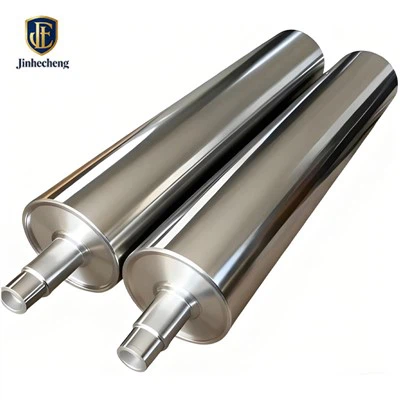
If you’re a mill owner, or someone looking to upgrade your machinery, I’m here to help. Whether you need a mid-range loom for small batches, a sustainable water-jet line, or even just advice on what type of machine fits your factory’s needs, don’t hesitate to reach out. We’ve got custom solutions, flexible financing options, and a team that’s on call 24/7 to get you up and running.
References
Mirror Chrome Roller International Textile Manufacturers Federation. (2023). Global Textile Machinery Market Outlook.
Statista. (2024). Global Apparel and Home Textiles Retail Sales.
Textile World. (2023). Survey on Mill Machinery Priorities.
OECD. (2023). Sustainable Manufacturing in the Textile Sector.
Qingdao Jinhecheng Machinery Co., Ltd.
Address: Aishan Industrial Park, Yanghe Town, Jiaozhou, Qingdao City, Shandong Province
E-mail: alice@jhcroller.com
WebSite: https://www.jhcroller.com/
