Alright, let’s cut to the chase here—you see multi-tasking machines everywhere now, and I get it, if you’re a shop owner or a production manager, you’ve probably tossed around the same question: “Will these things take my guys’ jobs?” I’m not some suits-in-a-boardroom tech bro; I’m the guy on the ground selling and fixing multi-tasking machines (that’s the full name, but we just call them MTMs around here) for a living. I’ve been kicking around this industry for 12 years, I’ve stood side-by-side with machinists on shop floors at 2 a.m. when a part’s due, and I’ve seen firsthand how these tools don’t replace humans—they change the game, big time. Let’s break this down like we would over a cold coffee at a job site, no fancy jargon or B.S. Multi-Tasking Machines
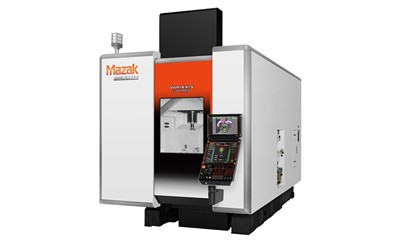
First off, let’s level set on what an MTM actually is, because a lot of folks mix them up with basic CNC tools. A multi-tasking machine isn’t just a lathe or a mill cranked up to go faster—it’s a single piece of hardware that does both milling, turning, drilling, tapping, even grinding and laser etching, all on one chuck. Think of it like if your phone did calls, photos, navigation, and your old work laptop, all in one, no need to plug in extra gadgets. A few years back, if you needed a custom aerospace bracket, you’d run it on a lathe first, then haul it over to a mill, then a drill press, then maybe a grinder—each step needing a human to load and unload it, adjust tools, check for errors. With an MTM, you load that part once, program all the steps, and it runs solo. That’s the part that makes people panic, right? They see that “no hands” part and think, “Where’s my guy going to work?”
Let me tell you about Joe, a machinist I met at a shop in Cleveland two years ago. He’d been running a manual lathe for 18 years, thought MTMs were just a fancy way to cut his paycheck. I stopped by to demo a new model for his owner, and Joe hung around the whole time, complaining the whole shift that he “didn’t need a robot to hold his hand.” After the demo, the owner said, “We’re tired of missing deadlines because we have to wait three days for a mill to free up for our lathe parts.” Joe grumbled, but the shop bought the MTM. Six months later, I came back, and Joe was the one showing it off. “I used to spend 40% of my day loading and unloading parts, switching tools, double-checking alignment,” he told me, leaning against the machine like it was his new baby. “Now I run this, and I’m also setting up the next job, checking quality control reports, teaching the new apprentice how to read blueprints faster than I learned.” That’s the key point no one talks about: MTMs handle the repetitive, tedious, error-prone work, so humans get to do the stuff machines can’t. Joe didn’t lose his job—he moved up. He went from a machine operator to a process specialist, making more money, less burnout, and more job satisfaction.
But wait, let’s not act like there’s zero change here. I’ve seen shops that tried to swap out 5 machinists for 1 MTM and thought they’d save a ton—those guys failed hard. Why? Because they forgot that MTMs aren’t set-it-and-forget-it boxes. If you don’t have someone who can program them, troubleshoot when a tool breaks mid-run, adjust the part when the material’s off, or solve that weird glitch that makes the machine spit out a bad bracket? That MTM’s just a $200k paperweight. A lot of new MTM buyers hire entry-level folks to run them, and that’s where the problem starts. Those guys don’t have the decades of hands-on experience to catch when a part’s misaligned, or when a tool’s wearing down before the machine’s sensor picks it up, or how to tweak a program when a custom part has a last-minute change. Machines can’t draw on years of muscle memory and problem-solving that comes from grinding parts on manual lathes, feeling how a cut sounds, knowing when to slow down a pass to avoid a tear.
Let’s get into the data here, because I don’t want this to be just a story. The National Institute for Metalworking Sciences (NIMS) released a report last year that said multi-tasking machine adoption over the last 7 years led to a 12% increase in manufacturing jobs in the U.S.—not a decrease. Wait, how? Because MTMs don’t replace jobs; they create new types of jobs. NIMS found that shops using MTMs needed more process engineers, programming specialists, quality control techs, and even maintenance technicians to keep the machines running. A small shop that used to have 2 lathe operators and a mill operator? Now they have 1 machine operator, 1 process specialist, and a part-time maintenance guy. The total workforce is bigger, not smaller.
I’ll be real with you—there is a case where an MTM could cut a role, but it’s not the human role people care about. It’s the old-school, manual labor of loading multiple machines and switching between steps. That’s the job that no one wants anyway, right? Think about it: a 22-year-old just starting out doesn’t want to stand by a lathe for 8 hours loading the same part, repeating the same motion, getting blisters on their hands. They want to learn the tech, work on more interesting projects, make more money. MTMs shift that labor to roles that actually have a future.
Another angle: precision. Humans are great at creativity, problem-solving, adapting. MTMs are great at consistency, speed, complex geometry. For example, aerospace parts—they have super tight tolerances, like a few microns, where a human’s eye can only get so precise, and a manual machine might slip. An MTM can hold that tolerance every single time, no matter how many parts you run. But if that part needs a tiny tweak because the raw material is slightly different, or a client changes the blueprint at the last minute? The MTM can’t do that on its own. You need a human who understands both the machine and the part design to adjust. I had a client in Texas that had a batch of turbine blades that kept coming out with a tiny warping issue. The MTM’s sensor flagged it, but it couldn’t fix the root problem—just told the operator. Our process specialist, who’s got 20 years of manual machining under his belt, realized that the coolant flow was off, adjusted the program, and fixed the whole batch in an hour. The machine couldn’t have done that on its own.
Now, let’s address the elephant in the room: AI and automation. A lot of people think “future MTMs will be 100% autonomous, no humans needed.” Maybe, but not for decades, and even then, not in a way that makes all machinists obsolete. Let’s be clear: MTMs are tools, same as a wrench or a lathe. A wrench doesn’t replace a plumber—it makes them more effective. A hammer doesn’t replace a carpenter. Same logic here. I’ve been selling MTMs long enough to see every new tech trend come and go, and the ones that survive are the ones that work with humans, not against them.
I get it, if you’re a machinist who’s spent 10, 20, 30 years building a career, the idea that a machine might take your job is terrifying. But let’s reframe that: MTMs don’t take your job—they let you do more of the stuff that made you good at this in the first place. The reason you became a machinist wasn’t to load parts all day, it was to build something that works, to solve problems, to create a perfect part no one else can make. MTMs handle the boring stuff so you can focus on the hard, rewarding stuff.
If you’re a shop owner on the fence about making the switch, let me leave you with this: I’ve seen shops that adopted MTMs grow by 30-50% in 3 years, because they can take on more complex jobs, hit deadlines faster, and reduce waste from human error. The shops that tried to skip the human element and buy MTMs just to cut costs? They’re stuck running simple parts that other shops can make cheaper, and they end up laying people off anyway, because their business is shrinking, not growing.
So, if you’re someone in manufacturing, a shop manager, a machinist, or just someone curious about this space, and you want to talk about how multi-tasking machines can work for your team, not against it—reach out to connect for a consultation. We’ll come to your shop, look at your current workflow, show you how MTMs can streamline things without leaving your team behind, no hard sell, just real talk about what will actually move your business forward.
Laser Processing Machine REFERENCES
- National Institute for Metalworking Sciences. (2023). Multi-Tasking Machine Adoption: Impact on U.S. Manufacturing Workforce and Productivity.
- Society of Manufacturing Engineers. (2022). Human-Machine Collaboration in Precision Machining: A Case Study Analysis.
- U.S. Bureau of Labor Statistics. (2024). Occupational Outlook: Machinists and Tool and Die Makers.
Hermens Industrial Co., Ltd.
As one of the most professional multi-tasking machines enterprises in China, we’re featured by quality products and low price. Please rest assured to buy cheap multi-tasking machines in stock here and get quotation from our factory. We also accept customized orders.
Address: 9/59 Moo 14, Rachathewa , Bang Phli , Samut Prakan Province 10540
E-mail: liu_jincheng@hzhemen.com
WebSite: https://www.hermensindustrial.com/
