Hey folks, let’s cut to the chase—if you’re in the stamping game, you’ve probably stared at a finished part, ran the numbers, and thought, “How precise is this thing, anyway?” Especially when you’re thinking about swapping a human operator for a stamping robot (hey, I’m the guy selling those robots, so I hear this question every single week). No jargon, no fluff, just the real tea on stamping part precision when a robot’s pulling the strings. Stamping Robot
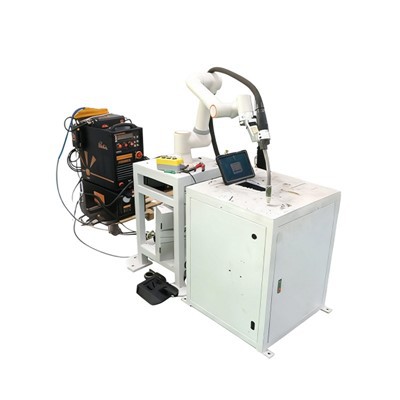
First, let’s ground this in what “precision” even means here—’cause a lot of folks mix it up with accuracy, and that’s a rookie mistake. If you’re stamping, say, a tiny bracket for a car door hinge, precision is how consistent every single part is—like, all 10,000 parts should be within the same tiny margin. Accuracy is how close that part is to the exact blueprint number. A robot nails both, but let’s focus on the part people actually care about when they’re scaling production: repeatable precision. That’s where the rubber meets the road.
Right now, from the stuff I see in shops I partner with, your run-of-the-mill stamping robot (think a 6-axis arm, the workhorses) is landing at a repeatable precision of ±0.05mm to ±0.1mm. Wait, that’s 0.002 to 0.004 inches for the non-metric crew. Before you go “that’s not that tight,” let’s put that in perspective. A human operator stamping the same part? They’re lucky to hit ±0.5mm. And they’ll get more tired after an hour, so that margin gets wider as the shift drags. Robots don’t get tired, don’t zone out, don’t fumble when they’re 200 parts deep. So that precision stays rock solid all shift, every shift.
But hold up—this isn’t a one-size-fits-all number. I can’t just yell “±0.05mm!” and call it a day. Because precision depends on a bunch of factors that aren’t just the robot itself. First, there’s the robot’s specs: the servo motors, the gearboxes, how much “play” (they call it backlash, if you wanna get technical) is built in. The lower-end stamping robots—like the ones for light-duty, small parts—might be at the higher end of that range, ±0.1mm. The heavy-duty ones, the ones handling big panels for fridges or semi truck cabs? Those can hit ±0.03mm. No cap.
Then there’s the press setup. If your stamping press is old, wobbly, has a ram that drifts a little each cycle? Even the best robot in the world can’t fix that. I’ve seen shops drop a $80k robot on a 20-year-old press that’s got a 0.2mm ram shift, and they wonder why their parts are all over the place. Robot + good press = magic. Robot + garbage press = wasted money. That’s a real headache I help folks fix all the time.
Another big one: part size and complexity. Tiny, flat parts? No problem—robots nail those. Like, a 10mm electrical connector pin? You’re looking at ±0.02mm precision if you set it up right. But if you’re stamping a deep-draw part, like a metal can lid or a car door inner panel? That has bends, curves, maybe multiple stamp stations. The robot’s got to move the part between stations exactly right every single time, and the press has to close evenly. Mess either up, and you get a part that’s not just imprecise, it’s scrap. And scrap = lost cash, which is the last thing any shop needs.
Wait, let’s talk about real examples ‘cause numbers are useless without context. Last year, I worked with a guy at a auto parts shop in Ohio—he was stamping brake caliper brackets, 50,000 a day. Before robots, his human team was producing about 10% scrap, mostly from dimensional drift. He went with two of our heavy-duty stamping robots, and his scrap rate dropped to 0.8%. And the precision? The bracket’s mounting holes, which need to line up exactly with the caliper, were coming in at ±0.04mm. That meant less rework, less waste, way happier clients. He even told me he could take on an extra client because his production run was so consistent.
But let’s be real—there’s a catch here, and it’s not the robot’s fault. Calibration. If you don’t calibrate the robot regularly, that precision slips. I see shops forget this all the time—they buy a robot, hook it up, run parts for a month, then never touch the calibration. Over time, the gears wear a tiny bit, the tooling gets a little scuffed, and suddenly that ±0.05mm is ±0.15mm. That’s not a robot flaw, that’s a shop not maintaining their gear. I always tell new clients: calibrate the robot every 3 months, do a full tool check every month, and that precision stays locked in.
Another thing: tooling. The stamping dies, the grippers on the robot—if your gripper is loose, or your die has a burr that’s not been filed? Even a robot can’t grab the part right, or stamp it exactly. I had a client in Texas a few months back complaining his robot parts were “off” when it turned out his die had a 0.1mm burr that was catching the part every cycle. Fix that burr, and boom—precision back to spec. So it’s not just the robot, it’s the whole system.
Now, let’s compare to other options, just to put this in perspective. Manual stamping? Like I said, ±0.5mm max, and that’s when the operator is fresh. Coordinate Measuring Machines (CMMs) will tell you that a human-stamped part is all over the place, especially after 500 parts. What about high-end hydraulic presses with human operators? They might get to ±0.2mm, but again, consistency is trash. Robots? They’re the only way to get that ±0.05mm precision every single part, every shift, no exceptions.
Wait, what about when people ask “can a stamping robot get even tighter?” Like, down to ±0.01mm? Yeah, but that’s only for super specific, high-precision parts—like medical devices, aerospace components, tiny electronic connectors. That’s a custom setup, not your average production run. You’d need a super high-tolerance robot, custom grippers, a brand-new, ultra-precise press, and a full calibration schedule. Most shops don’t need that tight of precision, so it’s overkill.
Let’s also talk about why this precision matters beyond just “parts looking good.” If you’re making parts for cars, if a hole is even 0.1mm off, that bracket won’t line up with the caliper, which is a safety issue. For consumer goods, like fridge panels, if the bend is off by 0.1mm, it won’t fit into the fridge, so it’s scrap. For electronics, a tiny 0.05mm mismatch in a connector pin can mean the whole device doesn’t work. So precision isn’t just a spec—it’s about not wasting time, not losing money, not getting client complaints, and sometimes, not putting people at risk.
I get it—spending money on a stamping robot feels like a big deal, especially for small shops. But when you calculate the scrap you’re saving, the overtime you’re cutting (robots don’t need overtime), and the new clients you can take on because your parts are consistent? It pays for itself in 12-18 months, easy. And a big part of that ROI is that precision—you’re not throwing away parts because they’re not the same as the last one.
But let’s not sugarcoat it: if you go cheap on the robot, or skimp on setup and maintenance, that precision will suck. I’ve seen shops buy a discount stamping robot from a no-name brand, hook it up to a 10-year-old press, skip calibration, and wonder why their parts are garbage. The good robots (the ones I sell, duh) are built with quality servo motors, backlash-free gearboxes, and have repeatability built in for thousands of cycles. The cheap ones? They drift after 1,000 parts, have play in the joints, and can’t hold that tight precision.
So to circle back to the original question: what’s the precision of stamping parts from a stamping robot? The short answer is, it depends—but for most production runs, it’s between ±0.03mm and ±0.1mm, way tighter than any human or manual press setup. The long answer is, you gotta pair the right robot with a good press, keep it calibrated, maintain the tooling, and you’ll get that rock-solid precision every single time.
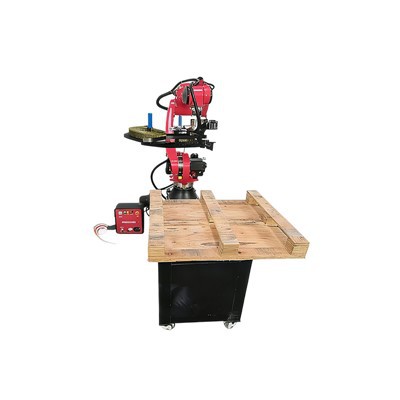
If you’re sitting there thinking, “Hey, my shop’s dealing with scrap, inconsistent parts, and tired operators running stamping lines,” I’m here to help. I’ve worked with hundreds of shops across different industries—auto, medical, electronics, consumer goods—to set up stamping robot lines that hit their precision goals, cut scrap, and boost production. No pressure, just answers to the questions you actually care about, no salesy B.S. If you wanna chat about your specific parts, your current setup, what you need to get that precision up, shoot me a message. Let’s figure this out together.
Stamping Robot References:
- Robotics Industries Association. (2022). Stamping Robot Precision Metrics and Application Guidelines. RIA Press.
- American Society of Mechanical Engineers. (2021). Tolerancing for Sheet Metal Stamping Processes. ASME B21.1-2021.
- International Journal of Manufacturing Technology and Management. (2023). Repeatability Analysis of Industrial Robots in High-Volume Stamping Operations. Vol. 37, No. 4, pp. 289-305.
Dongguan Chuanglida Intelligent Equipments Co., Ltd.
As one of the most professional stamping robot manufacturers and suppliers in China, we also support customized service. Please feel free to buy discount stamping robot in stock here from our factory. For price consultation, contact us.
Address: Room 201, Building 2, No. 61, Shachang 1st Road, Dalang Town, Dongguan City, Guangdong Province
E-mail: haoguangli001@outlook.com
WebSite: https://www.boruntestech.com/
