Hey folks, let’s cut right to the chase—if you’re in the PCB game, you’ve probably heard the term “PCB hot-press paper” thrown around more than a soldering iron at a reflow station. And if you’re on the supply end (full transparency, that’s us), we get tons of questions about its density. Not just random curiosity, but questions from PCB manufacturers fighting to tight tolerances, engineers tweaking stack-ups, and ops teams trying to nail material costs without sacrificing quality. So let’s break this down like we’re geeking out over a new piece of test equipment—no stuffy textbook jargon, just real talk from someone who’s dealt with this stuff on the loading dock, in the quality lab, and on calls with your teams. PCB Hot-press Paper
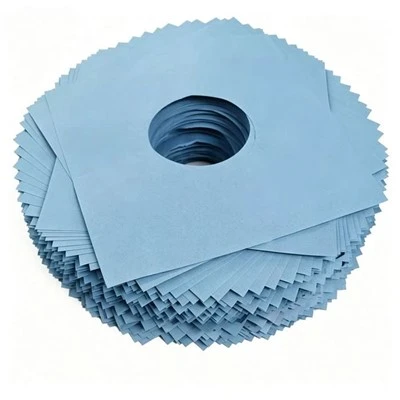
First off, what even is PCB hot-press paper, anyway? For the uninitiated (though if you’re here, you’re probably not), this isn’t the notebook paper you used in 5th grade to draw dinosaurs. It’s a specialized material—usually cellulose-based, sometimes blended with other fibers—engineered to withstand the brutal hot-press step in PCB fabrication. That step? You’re slamming multiple layers of copper foil, prepreg, and that hot-press paper together under insane pressure (like, thousands of PSI) and temps upwards of 170°C to 200°C. Its job? To act as a release agent, a heat distributor, and a pressure equalizer—no tiny wrinkles or gaps that’ll mess up your board’s circuit traces. Ditch the right paper, and you’ve got a batch of PCBs that get rejected at the assembly line, costing you way more than a few dollars of material.
Which brings us to density. It’s not just a random number to make our spec sheet look official. Density is the big player that determines how well that paper does its job. Think of it like this: a dense, well-consolidated paper is like a solid picnic blanket that won’t shift when you’re piling up sandwiches and drinks. A flimsy, low-density one? It’s like a crumpled napkin that’ll tear mid-outing, letting all the “gunk” (read: epoxy residue, excess copper) leak into your press. But here’s the thing—density for hot-press paper isn’t a one-size-fits-all number. It’s tied directly to what grade you’re using, what it’s made of, and even how it’s processed.
Let’s get into the real numbers, the stuff we actually measure in our lab every single day (we’ve got a scale that’s been around for 10 years, and it’s never let us down). For standard-grade PCB hot-press paper—this is the workhorse that 90% of our clients use for common double-sided and multi-layer PCBs—we’re talking densities in the range of 0.7 g/cm³ to 0.9 g/cm³. Wait, that’s a broad range, right? But here’s why: if you need a paper for a lower-pressure press job (like small-run prototypes), we can drop the density to ~0.72 g/cm³. It’s still sturdy enough, but a little more porous, which helps with any residual air getting squeezed out during press—no voids in your board. For high-volume, high-pressure production runs (like automotive PCBs that need to pass AEC-Q200)? We bump that density up to 0.85 g/cm³ to 0.88 g/cm³. That extra density means it’s more consistent across every sheet, no soft spots that’d cause uneven pressure.
But hold on—there’s a “heavy-duty” grade too, for when you’re dealing with super thick PCBs, or stack-ups with a ton of copper layers. That density jumps a bit, to around 0.92 g/cm³ to 0.95 g/cm³. Why? Those presses are cranking out way more force, and you need a paper that won’t compress too much, or break down after 5 or 6 press cycles (we test for cycle life, too—super important for cost per batch). If you use a standard 0.8 g/cm³ paper here, it’ll compress 10-15% under high pressure, leaving gaps in your stack and ruining the uniformity of your boards. That’s the kind of mistake that makes you call your material supplier at 8 PM on a Friday, and trust us—we’ve been on the other end of that call.
Now, let’s talk about what affects this density number, because it’s not just us pulling a number out of thin air. First, the raw material. Pure cellulose fiber paper (the most common) has a baseline density that’s way lower—like ~0.4 g/cm³—until we process it. We run it through a series of wet-pressing, drying, and calendaring steps (that’s the roller step that squashes it flat and dense) to bump it up. If we add a tiny percentage of synthetic fibers (like polyester or aramid) for extra heat resistance, that can tweak the density too—those synthetic fibers are a little stiffer, so the final paper might be 0.02 g/cm³ higher than a pure cellulose equivalent.
Then there’s basis weight, which is another spec you’ve probably seen. Wait, basis weight (grams per square meter, gsm) and density are related, but not the same. A lot of folks mix these up, so let’s clear that up real quick. A 100 gsm paper vs. a 120 gsm paper—if they have the same thickness, the denser one has a higher gsm. But if you have two papers with the same gsm, the thinner one is denser. We measure both because a lot of clients ask for a specific gsm (say, 110 gsm) to fit their press bed, so we match that gsm by adjusting density to get the right performance. For example, a 110 gsm standard paper might be 0.82 g/cm³, while a 110 gsm prototype-grade paper is a little less dense (0.75 g/cm³) because it’s a touch thicker to help with air release.
Now, why does this actually matter for you, the PCB fab? Let’s get specific. If you’re using a paper that’s too low-density, two things happen: first, it compresses too much during the hot press, so your epoxy resin seeps into the paper. That might sound good, but no—when you pull the paper out after pressing, it can leave tiny fibers on your copper layers, which lead to conductivity issues or even short circuits. Second, low-density paper has more uneven density across the sheet, so some parts of your PCB get more pressure than others—you’ll end up with some boards that are too thin, some too thick, and a whole bunch of rework.
On the flip side, too high-density paper? It’s stiff, so it doesn’t bend as easily. If you have a press that’s got a curved or slightly uneven platen, a super dense paper won’t conform to that, leaving gaps that let air get trapped, which cause voids in your prepreg. Also, high-density paper is more prone to cracking if you reuse it (we do sell reusable grades, by the way—way more cost-effective for high volume), so if you’re reusing paper, you don’t want to push the density too high, or you’ll have to toss it after fewer cycles.
Wait, let’s throw in a real quick example from last month—one of our long-term clients, a mid-sized PCB fab that does industrial controls, was having issues with their multi-layer boards having surface inconsistencies. They were using a competitor’s 0.78 g/cm³ paper, and their press team said it was compressing too much. They switched to our 0.85 g/cm³ standard grade, and their rework rate dropped by 12%. That’s not a random stat—we track that stuff for every client, because that’s how we know our numbers actually work.
Now, let’s get to the stuff you might not see on a spec sheet. We test our density not just with a lab scale, but also with a portable density meter for on-site quality checks (yep, we bring these to client visits if they want). We also control for moisture content, because that affects density too. Wait, moisture—dry paper is denser than paper that’s absorbed a bit of humidity, right? Because water is heavier than air in the gaps. So we store all our paper in climate-controlled warehouses (60% humidity, 22°C) to keep density consistent. If we ship paper that’s too damp, it’ll be a tiny bit less dense than our spec, so we let it acclimate for 24 hours before we measure it. That’s the little stuff that makes us different from other suppliers—we don’t just send you a roll of paper and hope it works.
So, what should you be asking your supplier about PCB hot-press paper density? First, don’t just ask for a “standard grade”—ask for the exact density range, and how that’s calculated (like, is that conditioned at 60% humidity, 23°C? That’s the industry standard, by the way). Second, if you’re doing high-volume or high-tolerance boards, ask for density consistency per sheet—we have a tolerance of ±0.03 g/cm³ across a single sheet, which is way tighter than most competitors (some are ±0.05). Third, ask about how their processing steps affect density—do they calender their paper multiple times, or just once? Multiple calenders give more uniform density, which is what you need for consistent boards.
Before we wrap this up, let’s talk about a common myth. Some folks think that higher density is always better. Nope. For small-run prototypes, a lower density paper is actually better because it’s more forgiving—you don’t have to nail every single press parameter, and it’s cheaper if you’re only using a few sheets. For high-volume automotive PCBs, that 0.85 to 0.88 g/cm³ sweet spot is perfect—enough density for pressure consistency, but not so high that it’s brittle or hard to handle.
Look, at the end of the day, PCB hot-press paper density isn’t just a number on a spec sheet. It’s the difference between a board that passes all your tests, and a batch that gets scrapped. It’s what makes your press run smoothly, cuts down on rework, and keeps your production on schedule. We’ve been supplying this stuff for years, and we’ve seen firsthand how getting the density right makes our clients’ lives way easier.
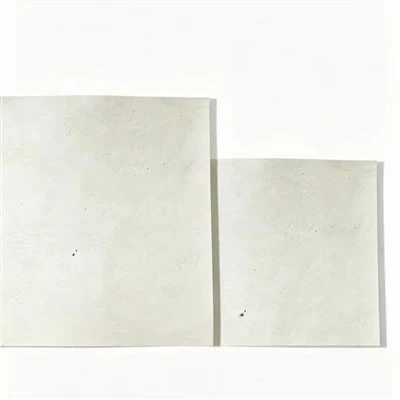
If you’re tired of guesswork with your hot-press paper, if your rework rate is higher than it should be, or if you just want to check if your current supplier’s density numbers are actually matching up, hit us up. We don’t do pushy sales stuff—we’ll send you a free sample of our standard grade, walk you through the density specs, and even chat through what grade would work best for your specific press and board types. No hidden fees, no confusing fine print, just real answers from people who work with this every day.
Wet Paper-based Friction Lining References
- "PCB Manufacturing Process: Hot Pressing and Material Properties." IPC Association Connecting Electronics Industries, 2022.
- "Specialty Cellulose Papers for High-Pressure Industrial Applications." Journal of Applied Paper Science and Technology, vol. 15, no. 3, 2021, pp. 112-119.
- Quality Control Guidelines for Hot-Press Papers in PCB Fabrication. National Center for Manufacturing Sciences, 2020.
Shanghai Rongying Industrial Co., Ltd.
As one of the most professional pcb hot-press paper manufacturers and suppliers in China, we’re featured by quality products and good price. Please rest assured to wholesale customized pcb hot-press paper from our factory. If you have any enquiry about quotation and free sample, please feel free to email us.
Address: Jiahua Business Center C building 204 room, No.808 Hongqiao Road,Xuhui District,Shanghai,China
E-mail: info@shryspecialtypaper.com
WebSite: https://www.woolpaper.com/
