If you’ve ever stood next to an industrial plunger pump running full tilt in a chemical processing plant, a mining operation, or a food and beverage production line, you’ve probably felt that quiet, persistent heat humming off the equipment. As someone who’s spent the last 12 years working with plunger pumps—first as a technician troubleshooting breakdowns, and now as part of a team supplying these pumps to facilities across industries—I get asked this question constantly: “What’s the maximum temperature a plunger pump can actually handle?” It’s not a number we can pull out of thin air, and it’s not a one-size-fits-all answer. Let me break this down like I would with a new client who’s trying to spec the right pump for their high-temperature application, no jargon included. Plunger Pump
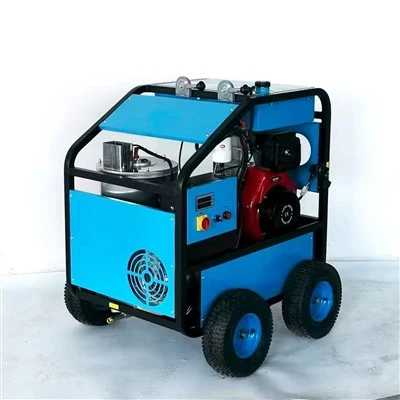
First, let’s start with the basics to set the stage. A plunger pump works by using a reciprocating plunger (a solid rod, not a hollow piston) to move fluid through the pump’s cylinder, creating pressure that pushes the fluid through the system. Unlike centrifugal pumps, which rely on impellers to move fluid, plunger pumps are positive displacement, meaning they can handle viscous fluids, high pressures, and harsh environments—including high-temperature fluids. That versatility is why we see them in so many sectors: they’re used to circulate molten plastic in extrusion lines, move hot oil in refinery processes, pump pasteurized milk in dairy plants, and even handle superheated water in power plant cooling systems. But that same reciprocating motion, the metal-on-metal contact in the crankcase, seals, and packing, is what makes temperature a make-or-break factor.
The maximum temperature a plunger pump can withstand depends on three core parts: the materials of the plunger and cylinder, the seals and packing that keep fluid from leaking out, and the lubrication system that keeps the crankcase and moving parts from seizing up. Let’s talk about materials first, because that’s the foundation. Most standard plunger pumps we supply are built with cast iron or ductile iron for the liquid end (the part that touches the pumped fluid) and the crankcase. Cast iron can handle temperatures up to around 200°C (392°F) without any issues—we’ve installed dozens of these pumps for clients handling hot water or light oil at that temp, and they run reliably for years. But if you’re dealing with anything hotter, like molten resins at 250°C (482°F) or superheated steam at 300°C (572°F), cast iron won’t cut it. We switch to materials like stainless steel (specifically 316 stainless, which has better heat resistance than standard 304) or even high-temperature alloys like Hastelloy or Inconel for those applications. 316 stainless can handle up to 450°C (842°F) when paired with the right seals, and those specialty alloys go even higher—some of our custom pumps built for steel mill applications handle fluid temperatures up to 550°C (1022°F) without degradation.
But here’s the catch: the material of the liquid end isn’t the only material that matters. The packing and seals that prevent fluid leakage are far more temperature-sensitive. For standard applications with fluids up to 180°C (356°F), we use aramid fiber packing or expanded PTFE (Teflon) packing. Aramid, the same material used in bulletproof vests, can hold up to 250°C (482°F) when properly lubricated, making it a go-to for mid-temperature applications. But if you’re running hotter than that, PTFE and aramid break down—they harden, crack, and lose their ability to form a tight seal around the plunger. For temperatures above 250°C, we use graphite-based packing. Graphite is a natural lubricant and heat-resistant material that can handle up to 650°C (1202°F), which is why it’s the standard for high-temperature industrial plunger pumps. The catch with graphite, though, is that it’s not compatible with every fluid—we can’t use it for pumping certain chemicals that react with carbon, so we have to cross-reference the fluid’s chemical makeup with the seal material before we build a pump. It’s one of those small details that makes a big difference; we’ve had clients try to cut costs by using standard packing on a high-temp application, and they end up with a seal failure within a week, costing them thousands in downtime.
Next up, lubrication. A plunger pump’s crankcase (the part that houses the gears, bearings, and the drive shaft) relies on oil to keep all the moving parts from grinding together. If the pump is handling a high-temperature fluid, that heat can transfer back to the crankcase, raising the oil’s temperature. If the oil gets too hot, it loses its viscosity—meaning it’s too thin to form a protective film between metal parts, leading to friction, wear, and eventual seizing. Standard mineral-based lubricants are only good for up to around 93°C (200°F) in the crankcase. If your pump is running with a fluid above that, we switch to synthetic lubricants, like polyalphaolefin (PAO) oils or ester-based oils, which can handle crankcase temperatures up to 150°C (302°F). For applications where the crankcase is exposed to even more heat—like pumps mounted right next to a furnace—we use high-temperature synthetic oils that can go up to 200°C (392°F), and sometimes we even add external cooling jackets around the crankcase to keep the oil at a safe temperature. I learned this the hard way early on: a client once installed a standard plunger pump next to their metal smelter, and the crankcase oil got up to 170°C, burning out the bearings in three months. We retrofitted a cooling jacket and switched to synthetic oil, and that same pump ran for another seven years without issues. That’s why we don’t just sell a pump and walk away—we work with clients to adjust the lubrication based on their operating environment, not just the fluid temperature.
Now, let’s get to the edge cases, because not all high-temperature applications are the same. For example, if you’re pumping a fluid that’s not just hot but also viscous, like molten chocolate or heavy crude oil, the temperature limit is lower than if you’re pumping a thin fluid like hot water. Viscous fluids create more friction inside the pump’s cylinder, which generates extra heat on top of the heat from the fluid itself. We had a dairy client a few years back who was pumping hot chocolate at 160°C (320°F) with a standard pump, and it kept overheating within hours. Turns out the chocolate’s viscosity was adding 30 extra degrees of heat inside the cylinder, pushing the total operating temp beyond what the standard cast iron pump could handle. We swapped in a 316 stainless steel pump with graphite packing and adjusted the plunger’s clearance to reduce friction, and that worked perfectly. It’s a common mistake people make: they look at the fluid’s temperature and pick a pump, but they forget to account for heat generated by the pump’s own operation.
Another edge case is pressure. High-temperature plunger pumps are often used for high-pressure applications, and the pressure itself affects the temperature limit. When a fluid is compressed, it generates heat—this is why a bicycle pump gets warm when you inflate a tire. If you’re running a plunger pump at 3,000 PSI with a fluid at 200°C, the internal heat from compression can add 20-30 degrees, bringing the total operating temperature closer to the pump’s limit. For that reason, we always factor in the pump’s operating pressure when we spec temperature limits; a pump rated for 5,000 PSI will have a lower maximum temperature rating than the same pump rated for 1,000 PSI, because the compression heat is higher. We’ve had clients who tried to run a high-pressure pump at a temperature it wasn’t rated for, and it ended up warping the cylinder bore, leading to plunger wear and leaks. It’s not just about the pump’s parts—it’s about how those parts work together under the actual operating conditions.
Now, what about the numbers that matter most for real-world use? To give you a clear guide, here’s a breakdown of the maximum temperatures we recommend for the standard and custom plunger pumps we supply:
- Standard cast iron pumps: Max fluid temperature of 200°C (392°F). These are for light, non-abrasive fluids like hot water, light oil, and dilute chemicals, used in general manufacturing and small-scale processing.
- 316 stainless steel pumps with aramid packing: Max fluid temperature of 230°C (446°F). Great for medium-temperature applications like pasteurized dairy, hot cleaning solutions, and light resins.
- 316 stainless steel pumps with graphite packing: Max fluid temperature of 400°C (752°F). We use these for high-temperature applications like plastic extrusion lines, hot oil transfer, and medium-pressure steam.
- High-temperature alloy (Hastelloy, Inconel) pumps with graphite packing: Max fluid temperature of 550°C (1022°F). These are custom-built for extreme applications like steel mill processes, molten metal transfer, and high-pressure superheated water systems.
But even with these numbers, there’s a way to push those limits with a few modifications. For example, if you need to run a pump at 220°C with a cast iron body, we can add a cooling jacket around the liquid end to transfer heat away from the cast iron, extending its temperature limit by 20-30 degrees. Or if you’re running a high-temperature pump with a fluid that’s slightly corrosive, we can line the liquid end with a special coating to protect the material, letting it handle temperatures up to 100 degrees higher than standard. These modifications are one of the biggest reasons clients come back to us—we don’t just offer off-the-shelf pumps; we adjust them to fit their specific needs.
I should also mention what happens if you exceed the maximum temperature, because it’s not just a matter of the pump breaking. Running a plunger pump beyond its temperature limit leads to chain-reaction failures that can shut down an entire production line. The packing will crack, leading to fluid leaks that can be a safety hazard (especially with hot, flammable fluids). The crankcase oil will break down, leading to bearing failure, which can destroy the drive shaft. The cylinder and plunger can expand unevenly from the heat, leading to scoring on the plunger surface, which wears out the packing faster. We’ve had clients who lost $10,000 or more in downtime because they skipped checking the temperature rating of their pump, and it’s a mistake we help them avoid now—we always ask for the full operating specs before we even suggest a pump.

At the end of the day, the maximum temperature a plunger pump can handle isn’t a fixed number. It’s a combination of materials, seals, lubrication, pressure, and the fluid being pumped. If you’re not sure what temperature your application needs, or if you’ve had issues with overheating pumps in the past, that’s where we come in. As a plunger pump supplier with decades of experience, we don’t just sell equipment—we help you spec the right pump for your needs, with modifications if required, to make sure it runs reliably for years. Whether you’re looking to replace an overheating pump, build a new production line, or just need advice on keeping your current pump working, we’re here to walk through the details with you. Reach out to our team to discuss your application, and we’ll help you find the right solution that fits your temperature, pressure, and performance requirements.
Hose Reel References:
- American National Standards Institute. (2019). Standard for Positive Displacement Pumps: Plunger and Piston Pumps. ANSI/Hydraulic Institute 5.6-2019.
- Fluid Sealing Association. (2021). Temperature Limits for Pump Packing Materials. FSA Technical Report TR-007.
- Manufacturing Engineering Association. (2020). High-Temperature Pump Material Selection Guide. MEA Publication 412-20.
- Society of Automotive Engineers. (2018). Lubrication Requirements for High-Temperature Industrial Pumps. SAE International Technical Paper 2018-01-0567.
Zhejiang GTM Hi-Tech Intelligent Equipment Co., Ltd.
We are one of the most experienced plunger pump manufacturers and suppliers in China, also support customized service. Please feel free to buy discount plunger pump for sale here from our factory. Quality products and reasonable price are available.
Address: No.5 of Changjiang Road, 2nd Economic Development Zone of Wenling, Zhejiang, China
E-mail: yehuanting1@hongyemfg.com
WebSite: https://www.gtmplungerpump.com/
