If you’ve ever been behind the wheel and felt your vehicle suddenly drift or veer to one side without you touching the steering wheel, that jolt of confusion can be overwhelming. For most drivers, the first thought is that they hit a patch of uneven pavement, or perhaps a tire pressure issue. But as an inner tie rod end supplier who’s worked with auto mechanics, fleet managers, and do-it-yourselfers for over a decade, I can tell you that a malfunctioning inner tie rod end is one of the most underdiagnosed causes of this exact problem. Let’s break this down, because understanding the role of this small but critical part isn’t just about fixing a car—it’s about keeping everyone safe on the road. Inner Tie Rod End
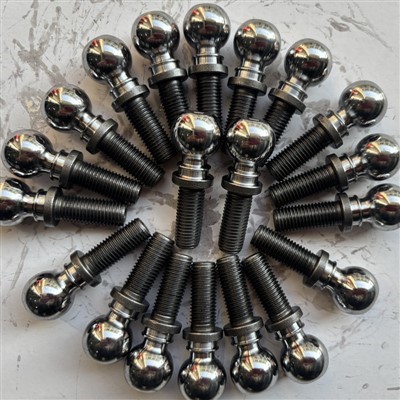
First, let’s set the stage: what exactly is an inner tie rod end, and what does it do? If you’re new to auto parts, the steering system is a linked network designed to transfer the motion of your steering wheel to the front wheels, so you can turn smoothly. The outer tie rod end is the part you can often spot under the car’s chassis, connecting the steering knuckle (the part that holds the wheel) to the steering rack. But the inner tie rod end is the unsung workhorse that sits closer to the center of the vehicle, linking the steering rack’s output to the outer tie rod. Its job is simple but non-negotiable: it creates a rigid, consistent connection that allows the steering’s turning force to be distributed evenly between both front wheels. If this part wears out, breaks, or malfunctions, that balanced force gets disrupted—directly leading to that unsettling veering motion.
I’ve seen this play out firsthand so many times. Last year, a regular customer who manages a local delivery fleet brought in three vans, all complaining of right-side veering. Their initial mechanic checked tire pressure, alignment, and even replaced the power steering pump, but the problem came back within a week. When we pulled the inner tie rod ends on those vans, we found that each had developed excessive play—looseness in the ball socket that allows the part to move independently of the steering rack. On the first van, the inner tie rod’s ball stud had worn down so much it was barely gripping the socket, and the second had a cracked seal that let in dirt, causing corrosion that ate away at the metal. The third? A tiny hairline fracture in the inner tie rod’s housing, which grew just enough during city driving to create uneven force transfer. Replacing those inner tie rod ends solved the veering issue for all three vans, and the fleet manager later told us it cut their alignment service bills in half that quarter. That’s not an anomaly—it’s exactly how this part behaves when it fails.
Now, let’s get into the science of why this malfunction causes veering. A properly functioning inner tie rod end maintains a fixed, precise angle between the steering rack and the outer tie rod. When you’re driving straight, the two inner tie rod ends (one for the left wheel, one for the right) work in tandem, so the front wheels stay aligned parallel to each other. If one inner tie rod end is faulty, that balance breaks. Let’s say the left inner tie rod has too much play. When you’re cruising at 40 mph, even a tiny bump or the resistance of a slightly uneven road will push the loose left wheel more than the right. The steering system can’t counter that because the inner tie rod isn’t rigid enough to hold its position, so the car drifts left—even if you’re holding the steering wheel perfectly straight. Over time, that play can worsen, and the veering might become more extreme, especially at higher speeds. It’s not a “pull” from tire pressure, which usually stays consistent and can be corrected with a slight adjustment; this veer is random, shifting depending on road conditions and how much stress is on the worn part.
What’s tricky about inner tie rod end malfunctions is that the warning signs aren’t always obvious at first. A lot of drivers don’t notice the small play until it leads to veering. Other common signs are uneven tire wear (especially on the inner edges of the front tires), a clunking or knocking noise when turning or going over bumps, or a steering wheel that feels “loose” and isn’t recentered easily after a turn. But veering is the red flag that most people can’t ignore. I’ve heard mechanics say they’ve had customers come in thinking their car was “possessed” because it would suddenly veer toward the curb, and in 9 times out of 10, the culprit was a failing inner tie rod end.
There are a few specific ways an inner tie rod end can malfunction, each contributing to veering in slightly different ways. The most common is wear in the ball joint assembly: the inner tie rod end has a ball stud that fits into a socket, held in place by a spring. Over miles, the ball and socket wear down, creating gap that lets the stud move freely. This is usually caused by time and exposure—road salt, dirt, and moisture get past the rubber seal that covers the ball joint, leading to corrosion and accelerated wear. Another issue is a cracked or broken inner tie rod housing. The inner tie rod is a hollow metal rod, and if it’s damaged by a small impact (like hitting a pothole hard, even if you don’t notice it), the housing can crack, weakening the connection. In some cases, the inner tie rod can separate from the steering rack entirely, which would cause total loss of steering control—but that’s a rare, extreme failure, not just veering.
I want to be clear: veering can have other causes, too. A misaligned steering system, uneven tire wear, tire defects, or even a worn steering rack can all lead to similar symptoms. That’s why it’s so important to have a professional diagnosis if you experience sudden veering. But what I’ve learned from years of working as an inner tie rod end supplier is that many repairs skip checking the inner tie rod first, which is where the problem actually lies. For example, a lot of shops will do a four-wheel alignment and call it a day when a car veers, but if the inner tie rod has excessive play, no alignment will fix that—because the alignment depends on the tie rods holding their precise length and angle.
Let’s talk about a real-world example that stuck with me. A woman brought in her 2018 sedan, saying her car would veer sharply to the right when she was driving on the highway. She’d replaced the tires twice, got an alignment done, and even had her power steering flushed, but nothing worked. When we inspected the inner tie rod ends, we found that the right inner tie rod’s ball seal had torn, and the ball stud was severely corroded—so much so that it wouldn’t hold a fixed position. We replaced both inner tie rod ends (we always recommend replacing pairs, even if only one is faulty, to ensure balance) and did a full alignment, and the veering stopped immediately. She later told us she felt safe again, especially since she commuted 50 miles each way to work on the highway. That’s the payoff: fixing a small, affordable part prevents a dangerous situation.
Now, as someone who supplies inner tie rod ends, I can tell you that the quality of the part matters more than most people realize. A cheap, low-quality inner tie rod end might wear out in 30,000 miles, while a high-quality one built with durable steel, a heavy-duty ball joint, and a reinforced seal can last 100,000 miles or more. I’ve seen too many customers buy the cheapest inner tie rod end they can find, only to have the same problem repeat in a year. That’s why when it comes to parts that affect steering and safety, skimping isn’t worth it.
So, what should you do if you notice your vehicle veering? First, don’t ignore it. Veering isn’t a minor annoyance—it’s a safety hazard that can lead to collisions, especially at high speeds. Take your car to a trusted mechanic and ask them to inspect the inner tie rod ends. A simple check for play (a mechanic will wiggle the tie rod while the car is on a lift to see if there’s excessive movement) takes just a few minutes, and it could save you from a bigger problem. If the inner tie rod ends are malfunctioning, replace them as soon as possible, and if you’re sourcing parts, make sure you’re working with a supplier who uses high-quality, tested components.

As I wrap this up, I want to emphasize that this small part—often overlooked in favor of tires or brakes—plays a huge role in your car’s handling. A malfunctioning inner tie rod end doesn’t just cause veering; it undermines the entire safety of your steering system. For every customer I’ve worked with, the solution was straightforward: identify the worn part, replace it with a reliable component, and restore that balance. If you’re a mechanic, fleet manager, or vehicle owner who’s dealing with steering issues and suspect an inner tie rod end is the culprit, or you’re looking for consistent, durable inner tie rod ends for your service bay, reach out to discuss your needs. We’re here to provide parts that keep your customers safe, and to answer any questions about installation, quality, or replacements.
Inner Ball Joint References
- Automotive Steering and Suspension Technology Association. (2021). “Tie Rod End Wear and Vehicle Handling.” Journal of Automotive Safety and Engineering.
- National Highway Traffic Safety Administration (NHTSA). (2019). “Vehicle Steering System Defects and Crash Risk.” Technical Report No. DOT HS 812 654.
- SAE International. (2020). “Performance Standards for Steering Linkage Components.” SAE J1707.
Taizhou Huazhe Auto Parts Co., Ltd.
As one of the most professional inner tie rod end manufacturers and suppliers in China, we’re featured by quality products and low price. Please rest assured to buy bulk high-grade inner tie rod end in stock here from our factory. For pricelist, contact us now.
Address: No. 2828, Binkang Avenue, Sanjia Street, Taizhou Bay New Area, Taizhou City, Zhejiang Province
E-mail: 19906762800@163.com
WebSite: https://www.huazheindustry.com/
